
Gum Health
Periodontal Care in Duncanville, TX
Gentle, expert gum disease treatment close to home.
Healthy gums are what hold a healthy smile in place. If you are seeing bleeding when you brush, persistent bad breath or gums that have pulled back from your teeth, that is worth acting on now rather than later. We treat it thoroughly, comfortably and with an eye on the long term. We welcome patients from Duncanville, Cedar Hill, DeSoto, Lancaster, Grand Prairie and Oak Cliff.
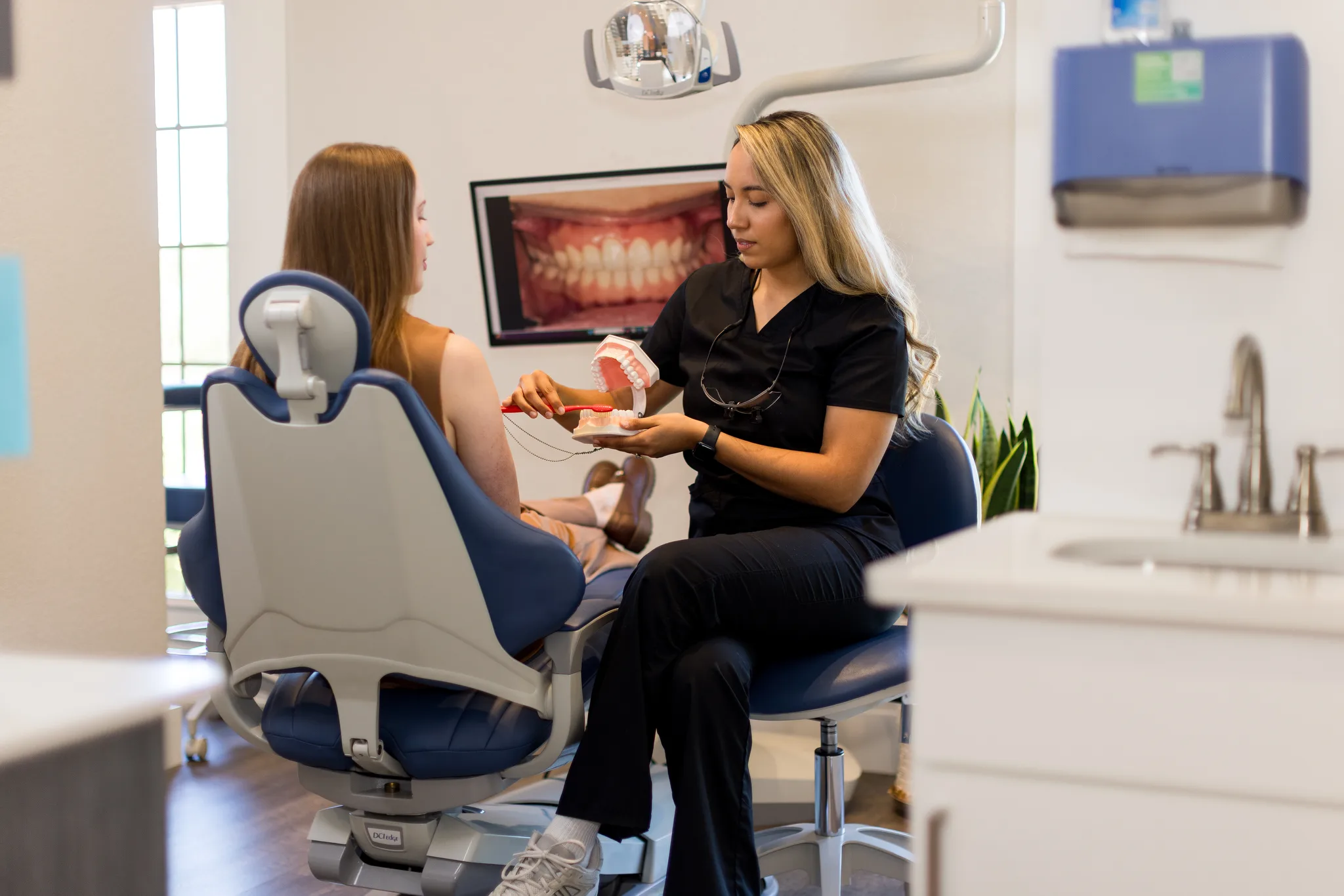
Expert Care. Flawless Results.
Periodontal Care at Precision Dental Care
Gum disease is a chronic infection of the gums and the bone that holds your teeth in, and its most difficult quality is that it starts quietly. There is often no pain in the early stages — which is exactly why it is usually found at a routine checkup rather than reported by the patient. Caught as gingivitis it can frequently be reversed altogether. Caught later, treatment stops it progressing and protects the bone that is left. That distinction is why we measure pocket depths at every exam rather than waiting for a symptom, and why the treatment we recommend is matched to the stage you are actually at rather than to a standard protocol.
Signs to Act On
- Red, swollen or bleeding gums Bleeding when you brush is not normal.
- Persistent bad breath Bacteria below the gumline is a common cause.
- Gum recession Teeth starting to look longer than they used to.
- Tooth sensitivity Exposed root surfaces react to hot and cold.
- Loose teeth or a changing bite A sign the supporting bone has been affected.
Treatments We Offer
- Deep cleaning (scaling and root planing) Removes plaque and tartar below the gumline and smooths the root so the gum can reattach.
- Periodontal maintenance Cleanings every three to four months, which is what prevents relapse.
- Laser gum therapy Soft tissue lasers for precise treatment, less bleeding and faster healing.
- Localized antibiotic therapy Antibacterial medication placed directly into a periodontal pocket.
We do not carry out surgical gum procedures such as flap surgery or bone grafting for periodontal disease in-house. Where that is genuinely needed, we refer you to a periodontist we trust locally and stay involved in your care.
Why Treating It Early Matters
Early treatment prevents tooth loss, reduces inflammation and bleeding, improves breath and taste, supports your general health and lowers what you spend on dentistry later. The evidence linking periodontal disease to heart disease and diabetes is part of why we treat gums as seriously as teeth. Alongside this, see dental cleanings and exams and preventive dentistry.
What to Expect
- Comprehensive exam Gum health assessed, pocket depths measured, digital X-rays taken.
- A personalized plan Matched to the stage of disease and your comfort level.
- Comfort-first treatment Numbing and gentle technique; ultrasonic scalers rather than scraping.
- Follow-up and support At-home guidance plus the maintenance interval that holds your result.
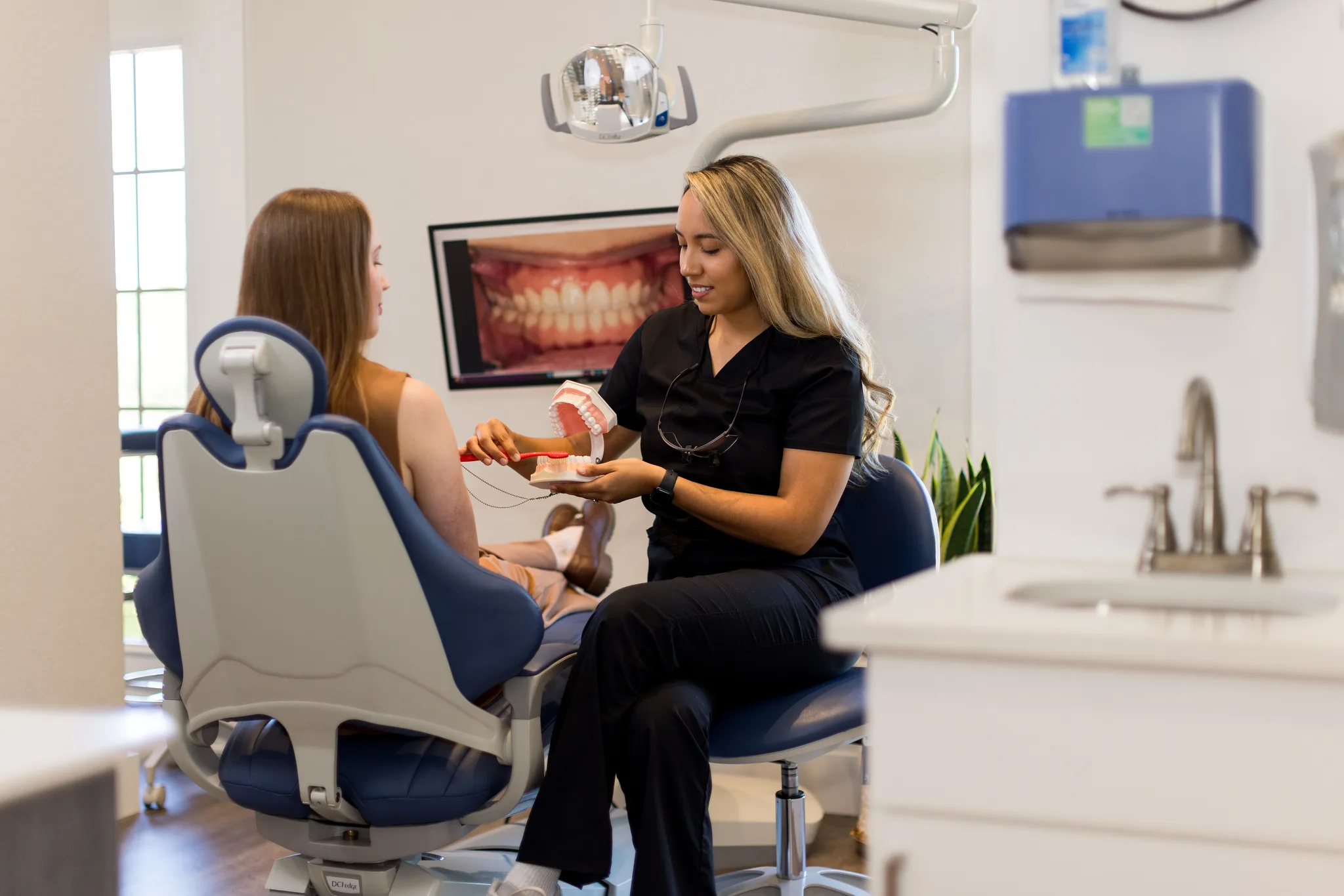
The short answer
Periodontal care is the treatment of gum disease, a chronic infection of the gums and the bone that holds your teeth in. It often causes no pain in the early stages, so it is usually found at a routine checkup. Caught early as gingivitis it can frequently be reversed; caught later, treatment stops it progressing and protects the bone that remains.
Periodontal Care FAQ
- Is gum disease reversible?
- Gingivitis, the early stage of gum disease, is usually reversible with proper care, while advanced periodontitis is not reversible but can be managed and stopped from progressing. That is why catching it early matters so much. When it is found later, treatment protects the bone that is left, and we measure pocket depths at every exam so it is found as early as possible.
- Does gum disease always cause pain?
- No, gum disease often progresses silently, with no pain in the early stages. That is why it is usually found at a routine checkup rather than reported by the patient. Signs worth acting on include red, swollen or bleeding gums, persistent bad breath, gum recession and loose teeth.
- How often will I need periodontal maintenance?
- Most patients do best with periodontal maintenance cleanings every three to four months after treatment. That interval is what prevents relapse. Your follow-up care includes at-home guidance plus the maintenance interval that holds your result.
- What happens if gum disease is not treated?
- Untreated gum disease can lead to bone loss, loose teeth and tooth loss, and it is linked to wider health problems. It is a chronic infection of the gums and the bone that holds your teeth in, so as it progresses that support is lost. Treatment stops it progressing and protects the bone that is left.
- Is laser gum therapy painful?
- No, laser gum therapy is gentler than traditional methods and tends to heal faster. Soft tissue lasers allow precise treatment with less bleeding. Treatment is carried out with numbing and gentle technique.
- Can I go back to regular cleanings after treatment?
- Usually not, because once gum disease has developed, periodontal maintenance is what keeps it under control. Maintenance cleanings every three to four months are what prevent relapse. We keep measuring pocket depths at every exam so we can see how your gums are holding up.
- Will insurance cover my treatment?
- Many insurance plans cover periodontal treatment. We verify your benefits and help you get the most from them. Treating gum disease early also lowers what you spend on dentistry later.
- Can gum disease affect my heart or other organs?
- Studies show links between periodontal disease and conditions including heart disease and diabetes. That evidence is part of why we treat gums as seriously as teeth. Treating gum disease early reduces inflammation and supports your general health.
- What if I am nervous about treatment?
- If you are nervous, tell us, because our team is used to anxious patients. We explain everything as we go and take it at your pace. Treatment uses numbing and gentle technique, with ultrasonic scalers rather than scraping.
- Is surgery always needed for gum disease?
- No, surgery is not always needed, and many cases are managed non-surgically with deep cleaning, laser therapy and maintenance care. Localized antibiotic therapy can also place antibacterial medication directly into a periodontal pocket. We do not carry out surgical gum procedures such as flap surgery in-house, so where that is genuinely needed we refer you to a periodontist we trust locally and stay involved in your care.
Book a visit
Plan your visit.
Address
Hours
Dental emergency? We hold time open every day for urgent visits.
Your doctors
The doctors behind your care.




Insurance & financing
Insurance-friendly.
We’re in-network with many PPO plans and file your claims for you as a courtesy.
Financing through CareCredit, Cherry and Proceed Finance — apply in minutes, in office or at home.