
Orthodontics
Orthodontics in Duncanville, TX
Straighten your smile with confidence and comfort.
Braces or aligners, seven years old or fifty — the right appliance is the one that suits the case, the age and the life it has to fit around. We offer the full range here and plan every one from a digital scan. Serving Duncanville, DeSoto, Cedar Hill, Grand Prairie and nearby communities.

Expert Care. Flawless Results.
Orthodontics at Precision Dental Care
Straightening teeth is only half of what orthodontics does. The other half is the bite — how the upper and lower teeth meet, where the load falls when you chew, and whether the jaw joint is being asked to compensate for teeth that do not fit together. That is why crowded teeth are worth treating even when someone is happy with how they look: crowding traps plaque where a brush cannot reach it, an uneven bite wears enamel unevenly, and both cost far more to deal with twenty years later. A straighter smile is the visible result. A bite that works is the one that lasts.
Signs Worth an Assessment
- Crooked, crowded or overlapping teeth The most common reason for treatment.
- Gaps between teeth Which can let neighboring teeth drift.
- Overbite, underbite or crossbite Where the two arches do not meet correctly.
- Difficulty chewing or speaking Often a bite problem rather than a habit.
- Baby teeth lost early or late A signal worth watching in a growing child.
- Jaw discomfort or clicking Sometimes related to how the bite closes.
What We Offer
- Traditional braces Metal or ceramic brackets, with the most precise control over tooth movement.
- Fastbraces A patented bracket system that can shorten treatment time.
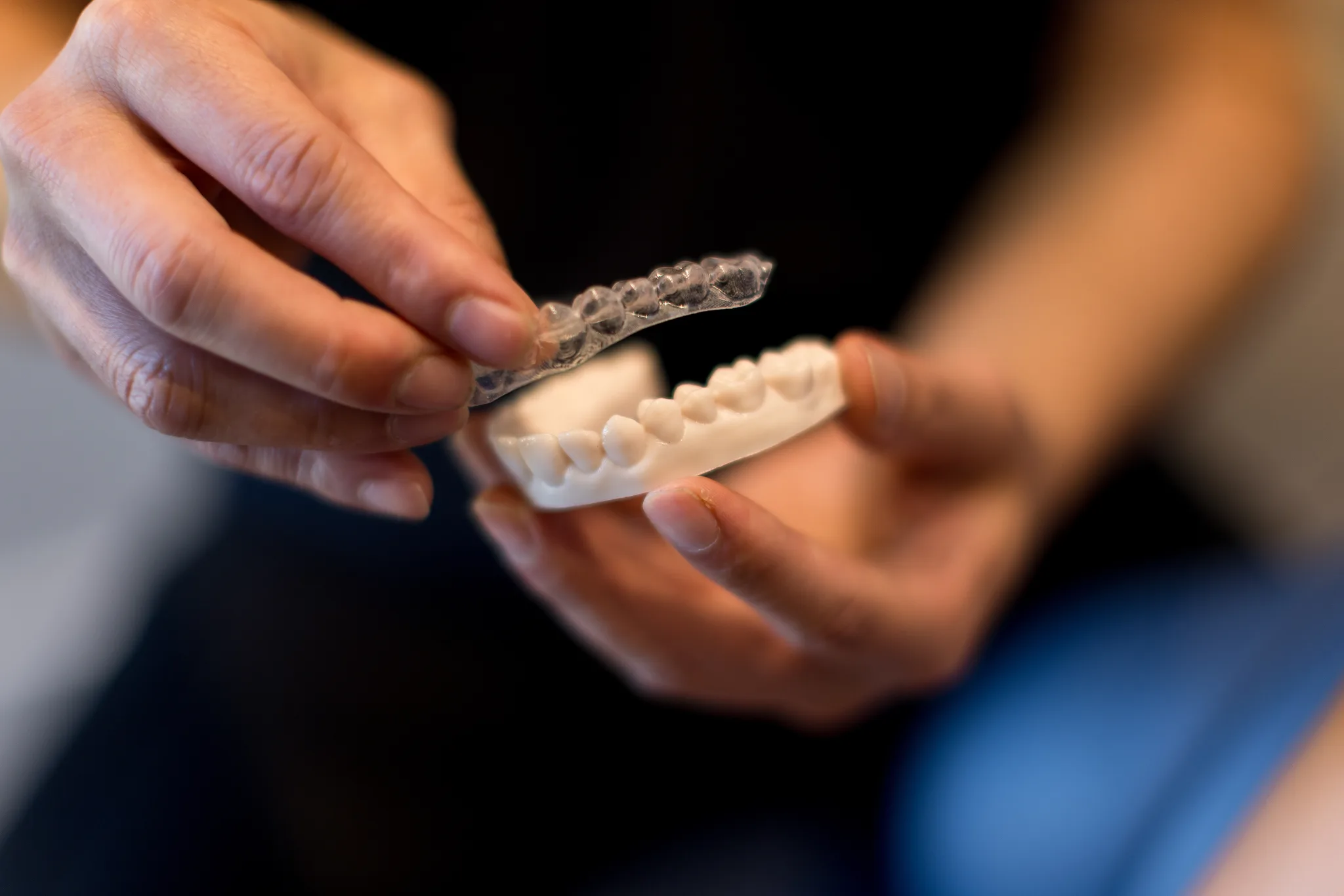
- Invisalign clear aligners Removable, nearly invisible trays. See also CandidPro.
- Retainers Custom-made, and the thing that protects the result you paid for.
- Phase I interceptive treatment Gentle guidance for a young mouth to prevent bigger problems later.
Every Age
For children, an evaluation by age seven catches problems while the jaw is still growing and often prevents more invasive treatment later. Teenagers usually want the least visible option, and clear aligners or low-profile ceramic brackets both suit. For adults it is never too late — and discreet options mean most people around you will not know. Treatment typically runs 12 to 24 months, with check-ins every four to six weeks for braces and six to eight for aligners.
Planned Digitally
An iTero scanner takes 3D impressions with no trays, digital smile design lets you see the intended result before you start, a cone beam scan shows jaw alignment and root position, and 3D printing produces retainers and appliances in-house. Shorter appointments, more predictable movement, and a retainer that can be remade from a stored scan if you lose it.
The short answer
Orthodontics straightens teeth and corrects the bite using braces, clear aligners or interceptive appliances, followed by retainers to hold the result. Beyond appearance, it fixes crowding that traps plaque and an uneven bite that wears enamel unevenly. Treatment is available for children, teenagers and adults.
Orthodontics FAQ
- What is the best age to start braces?
- There is no single best age to start braces, but the American Association of Orthodontists recommends an evaluation by age seven, and when treatment actually starts depends on growth and development. An evaluation at that age catches problems while the jaw is still growing and often prevents more invasive treatment later. Where it helps, Phase I interceptive treatment gently guides a young mouth to prevent bigger problems. For adults, it is never too late to start.
- Are clear aligners as effective as braces?
- For mild to moderate cases, clear aligners are as effective as braces, while more complex movements are usually better handled with braces. Traditional braces give the most precise control over tooth movement, which is why they remain the choice for harder cases. Aligners are removable and nearly invisible, and we recommend whichever suits the case, your age and the life it has to fit around.
- How long does treatment take?
- Most orthodontic treatment takes 12 to 24 months, depending on the severity of the case and how consistently the appliance is worn. Fastbraces can be quicker, because its patented bracket system can shorten treatment time. Check-ins run every four to six weeks for braces and every six to eight weeks for aligners.
- Are braces painful?
- Braces are not painful in any lasting way, though you may feel mild soreness for a day or two after an adjustment. That soreness is minor and temporary. Impressions are taken digitally on an iTero scanner, so there are no impression trays at the start.
- Can I finance orthodontic care?
- Yes, you can finance orthodontic care: we offer flexible payment plans and accept most dental insurance. Ask at your consultation and we will go through the options with you.
- What happens if I lose my retainer?
- If you lose your retainer, call us straight away, and we can remake it quickly from your stored digital scan. Retainers are custom-made and 3D printed in-house, so there is no need to start again with new impressions. It is worth acting quickly, because the retainer is what protects the result you paid for.
- How often will I need check-ups during treatment?
- Check-ups during orthodontic treatment are usually every four to six weeks with braces and every six to eight weeks with aligners. Each visit lets us confirm the teeth are moving as planned. Because every case is planned from a digital scan, appointments tend to be shorter and movement more predictable.
- Do braces interfere with sports or music?
- No, braces do not stop you from playing sports or music. Wear a mouthguard for contact sports, and we will help you adjust to any changes. If you would rather have nothing fixed to the teeth, clear aligners are removable.
- Will I need to change my diet?
- With braces you will need to avoid sticky and hard foods, but aligners come out to eat, so there are no restrictions with them. Sticky and hard foods can loosen or damage brackets and wires, which is why they are best left until treatment is over. With aligners, the trays simply go back in after you have eaten.
- Will people notice I have braces?
- Most people will not notice your braces if you choose ceramic brackets or clear aligners, both of which are discreet. Teenagers usually want the least visible option, and clear aligners or low-profile ceramic brackets both suit. For adults, discreet options mean most people around you will not know.
Book a visit
Plan your visit.
Address
Hours
Dental emergency? We hold time open every day for urgent visits.
Your doctors
The doctors behind your care.


Insurance & financing
Insurance-friendly.
We’re in-network with many PPO plans and file your claims for you as a courtesy.
Financing through CareCredit, Cherry and Proceed Finance — apply in minutes, in office or at home.