
Cosmetic Dentistry
Dental Bonding in Duncanville, TX
Restore chips, gaps and stains with fast, natural-looking results.
Bonding is the quickest and most affordable way to change how a tooth looks. A chipped edge, a small gap, a stubborn stain — most of it is one appointment, no drilling and usually no anesthetic. Serving Duncanville, Cedar Hill, DeSoto, Grand Prairie, Lancaster, Arlington and nearby communities.
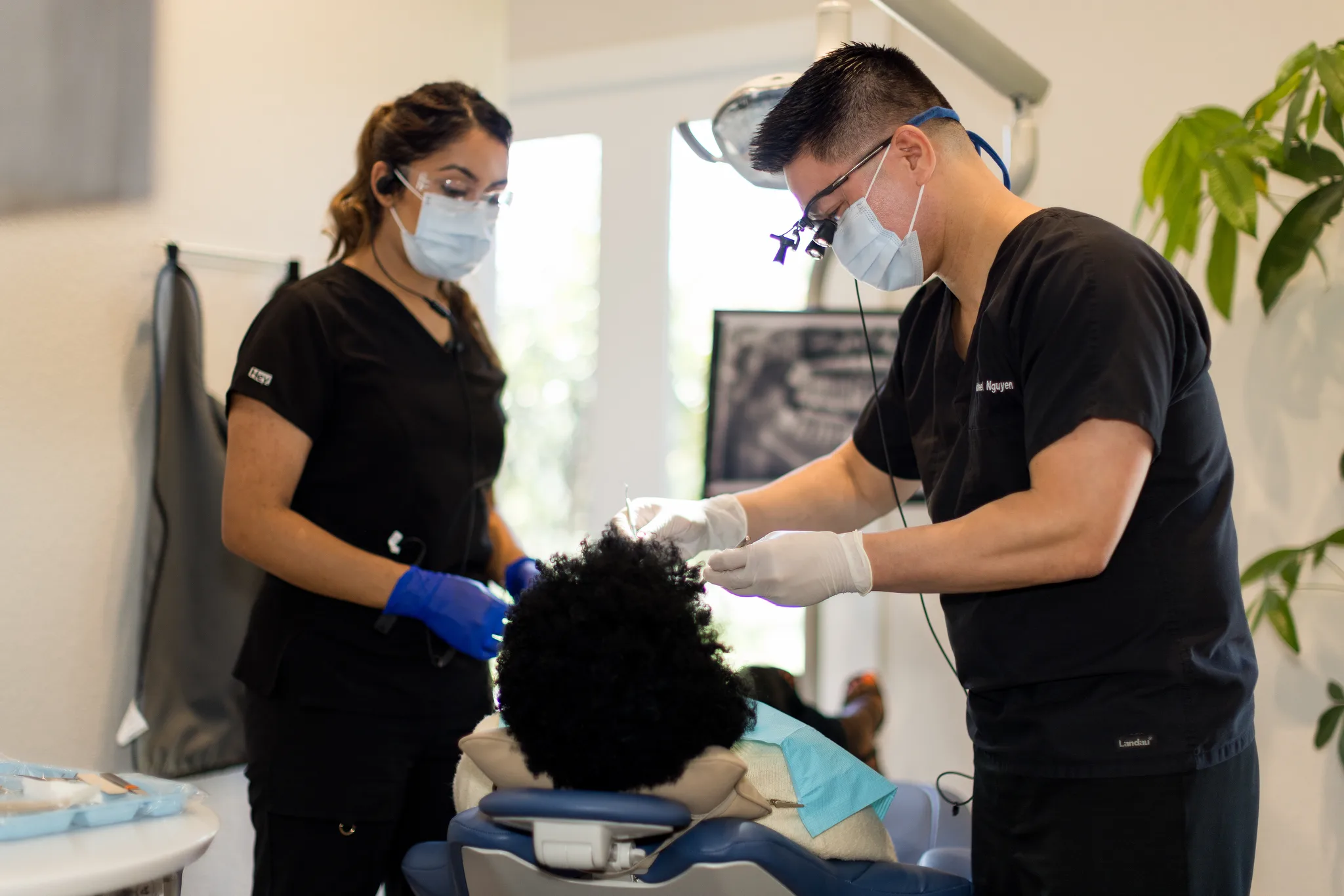
Expert Care. Flawless Results.
Dental Bonding at Precision Dental Care
Bonding uses the same tooth-colored composite resin as a white filling, but the work is closer to sculpture than repair. The resin is applied in soft layers, shaped by hand against the teeth either side, hardened with a curing light and then polished until it catches the light the way enamel does. That is why shade-matching and finish matter more than material here — a technically sound bond that is half a shade out reads as dental work every time someone smiles. It is minimally invasive, nothing healthy is removed to make room for it, and because nothing is cut away it can be adjusted, added to or replaced later without having lost anything.
What Bonding Fixes
- Chipped or cracked teeth The commonest reason people come in for it.
- Discoloration or deep stains Where whitening will not reach.
- Small gaps between teeth A non-invasive alternative to braces or veneers.
- Irregular or uneven teeth Reshaping an edge so a smile reads evenly.
- Exposed tooth roots Covering a sensitive area where the gum has receded.
The Appointment
- Consultation and shade matching Chosen in natural light against your own teeth.
- Preparing the surface A gentle etch, with no healthy tooth removed.
- Bonding agent applied What holds the composite to the enamel.
- Resin sculpted to shape Built in layers and contoured by hand.
- Cured, adjusted and polished Checked against your bite and finished to a natural lustre.
Around 30 to 60 minutes per tooth, and you leave with it finished.
Looking After It
Brush and floss as normal, do not bite ice or open things with your teeth, go easy on coffee, tea and red wine, and keep your routine cleanings. Composite can pick up stain over years where enamel would not, so those habits are what keep it matching. With proper care, bonding lasts five to ten years or more. One order-of-operations point worth knowing: whitening does not lighten composite, so whiten first and bond afterwards if you want both. Related treatment: porcelain veneers, teeth whitening and cosmetic dentistry.
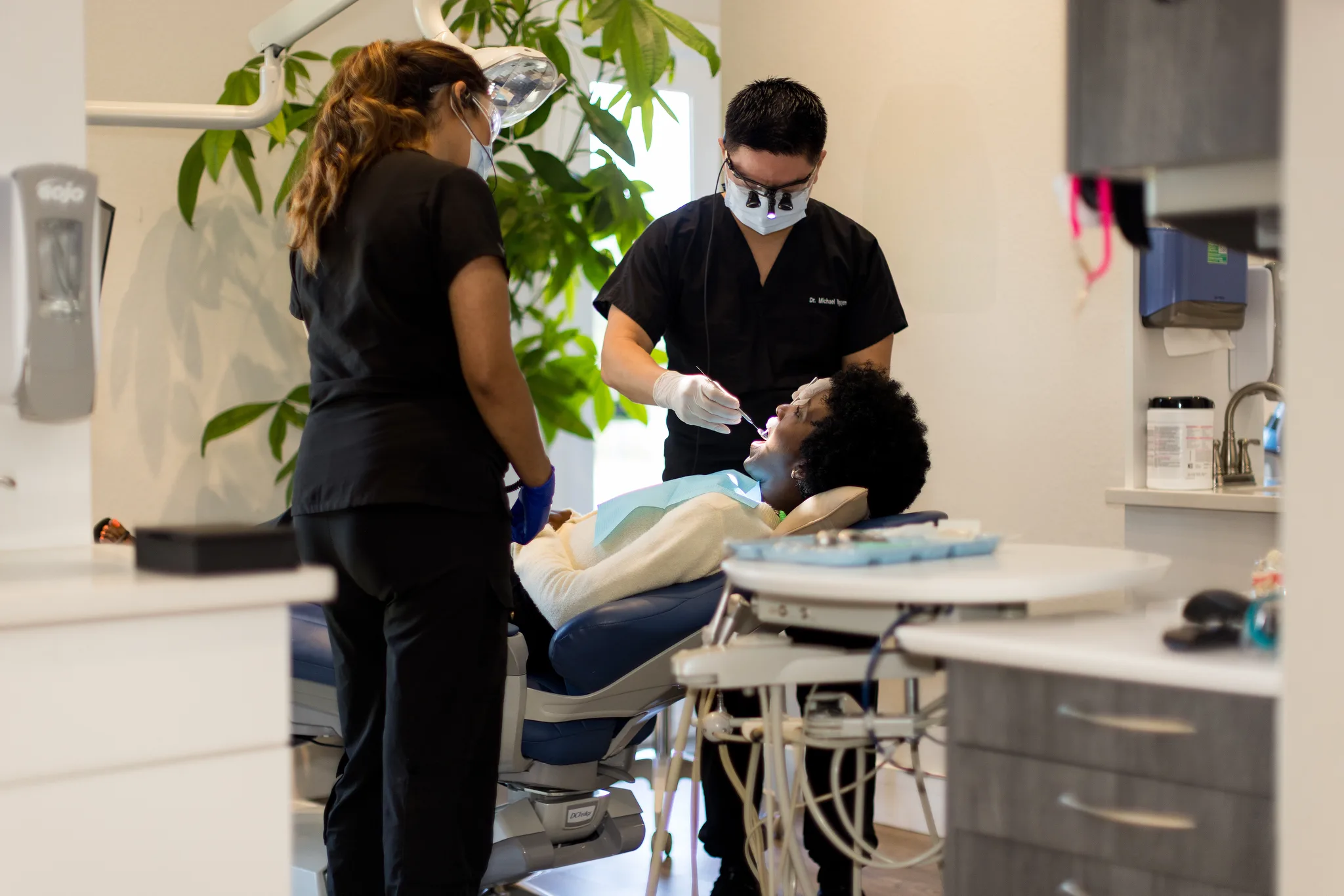
The short answer
Dental bonding repairs or reshapes a tooth with tooth-colored composite resin that is applied in layers, shaped by hand, hardened with a curing light and polished. It is used for chips, small gaps, stains and uneven edges, usually in a single visit. Nothing healthy is removed, so bonding can be adjusted or replaced later.
Dental Bonding FAQ
- How long does dental bonding last?
- Dental bonding lasts five to ten years or longer, depending on your bite and your habits. Composite resin can pick up stain over the years where enamel would not, so how you look after it decides how long it keeps matching. Brushing and flossing as normal, not biting ice or opening things with your teeth, and keeping your routine cleanings all help it last. Because nothing healthy is removed to place it, a bond that wears can be adjusted or replaced later.
- Is dental bonding painful?
- No, dental bonding is not painful, and most patients need no anesthetic at all. Nothing healthy is removed to make room for the resin; the surface is given a gentle etch, then the composite is built up in layers and shaped by hand. Most patients report no discomfort, and you leave with the tooth finished.
- Can bonding close a gap between my front teeth?
- Yes, bonding can close a small gap between the front teeth, and it is a popular, non-invasive alternative to braces or veneers for that job. Tooth-colored composite resin is built up in layers, shaped by hand against the teeth on either side and polished, with no healthy tooth removed. It is usually done in a single visit.
- Will bonded teeth stain?
- Bonded teeth can pick up stain over time, because composite resin is more prone to it than enamel. Going easy on coffee, tea and red wine, brushing and flossing as normal, and keeping your routine cleanings are what keep it matching. If the resin does dull, it can be re-polished or added to at a later visit.
- Can bonding be redone or touched up later?
- Yes, bonding can be redone or touched up later; we can add resin or re-polish it at a future visit. Because nothing healthy is cut away to place it, a bond can be adjusted, added to or replaced without having lost any tooth structure. Re-polishing is also how the finish is brought back if the resin has picked up stain.
- Is bonding a good option for children or teenagers?
- Yes, bonding suits children and teenagers with chipped teeth or small cosmetic flaws particularly well. It is minimally invasive, removes no healthy tooth and usually needs no anesthetic. Because nothing is cut away, it can be adjusted, added to or replaced later.
- How much does dental bonding cost?
- Dental bonding is one of the most affordable cosmetic options, and you get a full estimate at the consultation. It is quicker and less expensive than porcelain veneers, and most bonding is finished in a single appointment. The consultation is also where the shade is chosen, so you know the plan and the cost before any work begins.
- Does insurance cover dental bonding?
- Insurance may cover dental bonding where it is a structural repair, but purely cosmetic bonding usually is not covered. You get a full estimate at the consultation, so you know where you stand before anything is done.
- What is the difference between bonding and veneers?
- Bonding is quicker, cheaper and done in one visit, while veneers are more durable and resist staining better. Bonding builds tooth-colored composite resin directly onto the tooth by hand, with nothing healthy removed, so it can be adjusted or replaced later. It is a strong choice for a chip, a small gap or an uneven edge, while veneers are worth considering where durability and resistance to stain matter most.
- Can I whiten my teeth after bonding?
- You can whiten after bonding, but whitening does not change the color of the resin, so it is best to whiten first and then bond to the new shade. Composite is matched to your natural teeth when it is placed, and it stays that shade. If you whiten afterwards, the natural teeth lighten and the bonded areas do not, which can leave them looking darker than their neighbors.
Book a visit
Plan your visit.
Address
Hours
Dental emergency? We hold time open every day for urgent visits.
Your doctors
The doctors behind your care.




Insurance & financing
Insurance-friendly.
We’re in-network with many PPO plans and file your claims for you as a courtesy.
Financing through CareCredit, Cherry and Proceed Finance — apply in minutes, in office or at home.